
Blades That Handle Field Processing Work
Hunting Knives in Amarillo and Lubbock for game processing and outdoor utility tasks
Field dressing deer, skinning hogs, and processing game in remote locations requires fixed-blade knives with edge geometry designed for cutting hide and separating tissue without dulling mid-task. The Knife Guys carries hunting knives with blade profiles matched to West Texas game—drop points for general field work, skinning blade curves that follow natural separation lines, and clip points that handle detail work around joints and bone. Handle materials maintain grip even when blood-wet, and full-tang construction prevents blade wobble during heavy cutting pressure.
Hunting knives differ from folding carry tools by offering fixed-blade strength for processing larger game animals and performing camp utility tasks that would damage pocket knife hinges. Blade length typically ranges from four to six inches, balancing control during precise skinning cuts with adequate edge length for opening body cavities and cutting through heavy hide on mature animals.
Schedule a visit to the Amarillo or Lubbock location to compare blade shapes and handle ergonomics for your hunting style.
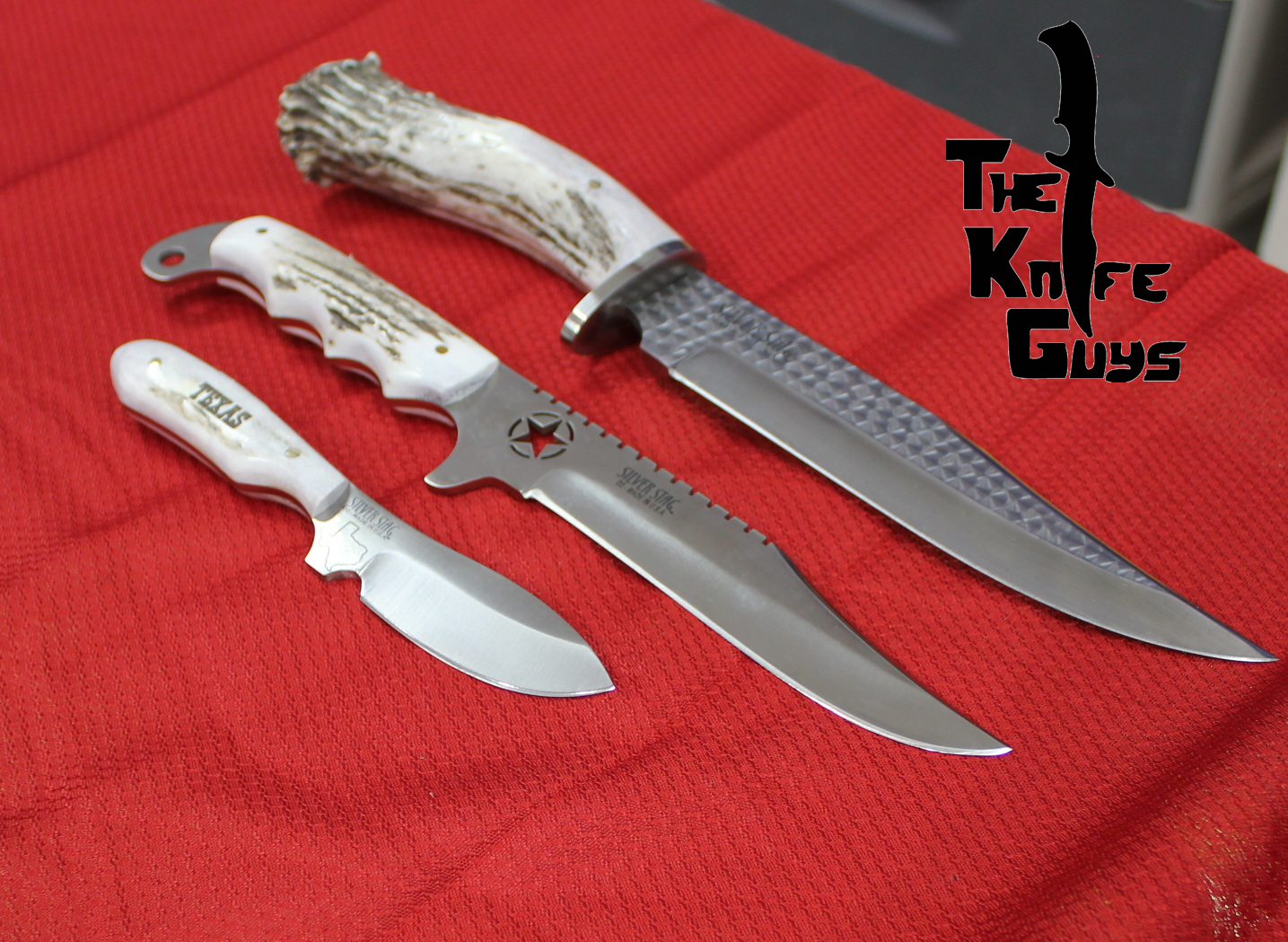
Why Blade Profile Affects Field Performance
Skinning knives feature upswept belly curves that follow hide contours without puncturing the membrane underneath, while drop-point hunting knives provide stronger tips for initial penetration and joint separation work. The Knife Guys stocks both dedicated skinning designs and general-purpose hunting blades, depending on whether you process game immediately in the field or prefer one knife that handles multiple tasks from field dressing through quartering.
Once you've matched a hunting knife to your processing routine, the blade maintains sharpness through hide removal and initial butchering without requiring field sharpening, the handle stays secure in your grip during repetitive cutting motions, and the sheath allows safe carry even when moving through brush or climbing into elevated stands. Steel selection affects how often you need to resharpen between hunts—higher-carbon content holds edges longer but shows rust if not cleaned immediately after processing game.
Fixed-blade construction eliminates the pivot points and lock mechanisms that can trap tissue or fail under the lateral pressure common during skinning work. Full-tang designs where blade steel runs through the entire handle provide the strongest construction for heavy processing tasks, while partial-tang knives reduce weight for extended carry during spot-and-stalk hunts.
Common Hunting Knife Questions
Buyers typically ask about blade steel, edge design, and sheath options when selecting knives for hunting and game processing.
What blade length handles most West Texas game?
Four-inch blades provide enough edge for deer and hog processing while maintaining control during detail work, though hunters processing larger animals or working through heavy hide often prefer five- to six-inch blades for fewer strokes per cut.
How does blade thickness affect field performance?
Thinner blade stock between 0.125 and 0.156 inches slices more easily through tissue and hide, while thicker blades above 0.187 inches offer greater strength for prying joints and chopping through bone but require more effort during skinning cuts.
Why do some hunting knives have gut hooks?
Gut hooks at the spine near the tip allow you to open hide from the inside without puncturing internal organs, though they require careful technique and add a feature that complicates sharpening for hunters who prefer simpler blade profiles.
What handle material works best during processing?
Rubberized or textured polymer grips maintain traction when wet better than wood or smooth leather, which becomes slippery once blood-soaked—important during extended processing sessions in Lubbock field conditions where water for cleaning may be limited.
When should I carry a dedicated skinner versus a general hunting knife?
Hunters processing multiple animals per season benefit from dedicated skinning blade curves that speed hide removal, while occasional hunters or those field-dressing only before transport often find general drop-point designs more versatile for camp tasks beyond game processing.
The Knife Guys stocks hunting knives from manufacturers who focus on field performance rather than decorative features, prioritizing edge geometry and handle security over appearance. Stop by to test grip comfort and discuss blade options based on the game species you hunt most frequently in the region.
