
Professional Edge Restoration for Culinary Blades
Kitchen Knife Sharpening in Amarillo and Lubbock for dull chef knives and damaged cutting edges
Chef knives that crush tomatoes instead of slicing cleanly, serrated bread knives that tear rather than cut, and paring knives that slip off vegetable skins all indicate edges worn past the point where honing realigns them. The Knife Guys sharpens kitchen blades using angle-controlled grinding that removes steel evenly across the edge, restoring the factory bevel geometry that allows knives to slice through ingredients with minimal pressure. Sharpening differs from honing—honing realigns an edge that's still sharp but bent, while sharpening removes metal to create a new edge on blades that have dulled completely.
Professional sharpening addresses damage that home sharpening systems can't fix, including chips from hitting bones, rolled edges from cutting on glass or ceramic surfaces, and uneven bevels from inconsistent freehand sharpening attempts. The process involves evaluating the current edge condition, determining the appropriate grit progression, and restoring the blade angle specific to that knife's intended use.
Bring your dull kitchen knives to the Amarillo or Lubbock shop for edge evaluation and sharpening turnaround estimates.
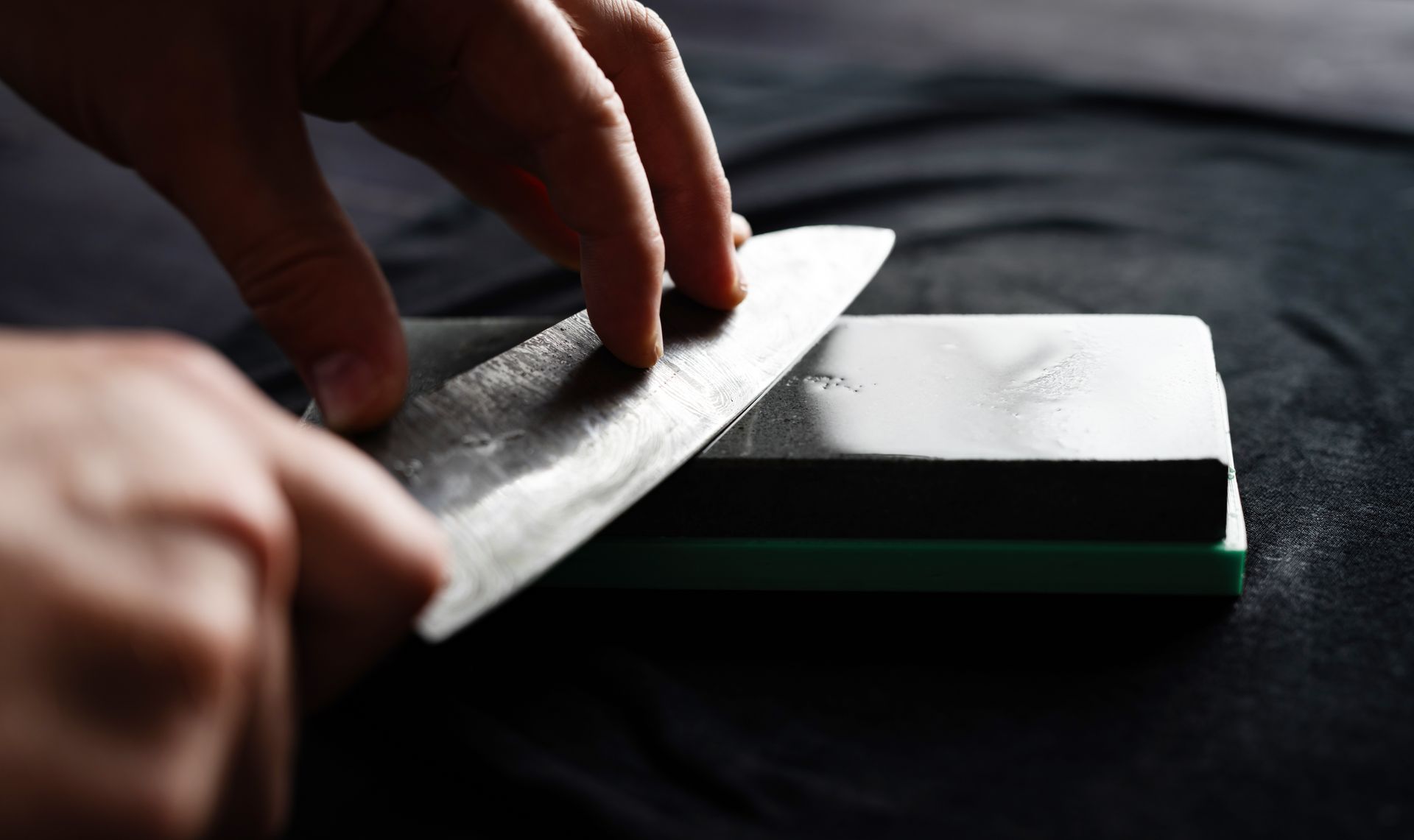
What Happens During Edge Restoration
Kitchen knife sharpening starts with inspecting the edge under magnification to identify chips, bevel inconsistency, and the amount of steel that needs removal. Coarse-grit stones remove damaged steel and establish the primary bevel, medium grits refine the edge and remove scratches from coarse grinding, and fine-grit finishing creates the polished edge that slices cleanly through ingredients without tearing cell walls. The Knife Guys matches sharpening angles to blade type—chef knives typically receive 15 to 20-degree bevels for general cutting, while specialized blades like sushi knives get narrower angles for precision slicing.
After sharpening, your chef knife slices paper-thin tomato slices without crushing, cuts through onions without requiring downward pressure that tears layers, and glides through proteins without sawing motions that shred tissue. The restored edge stays sharp through normal home use significantly longer than before, typically handling daily meal prep for weeks before requiring touch-up honing rather than full resharpening.
Sharpening service includes cleaning the blade to remove residue, checking handle integrity for loose rivets or cracks, and recommendations on cutting surfaces and storage methods that preserve edges between professional sharpenings. Knives with severe damage like broken tips or blade flex from overheating during improper sharpening may require more extensive repair or replacement discussion.
Sharpening Service Details
Home cooks and professional kitchen staff often have questions about turnaround time, blade condition assessment, and maintenance between sharpenings.
How often should chef knives be professionally sharpened?
Home kitchens using knives daily typically need professional sharpening every four to six months, while weekly honing between sharpenings maintains edge alignment—professional kitchens with heavier use require monthly service to keep edges performing consistently through high-volume prep work.
What causes kitchen knives to dull faster in Amarillo?
Hard water mineral deposits that accumulate on blades between washings act as mild abrasives during cutting, and low humidity causes wood cutting boards to harden and become more abrasive to knife edges compared to properly maintained boards in more humid climates.
Why do some knives hold edges longer than others?
German-style knives use softer steel around 56-58 HRC that dulls faster but resists chipping, while Japanese knives use harder steel around 60-62 HRC that holds sharp edges longer but chips more easily if twisted during cutting or used on hard surfaces like glass or stone.
Can damaged or chipped blades be repaired?
Minor chips less than 1/8 inch deep can be ground out during sharpening, though removing that much steel shortens blade life over time—deeper chips or cracks near the handle often mean the knife has reached end of service and needs replacement rather than continued resharpening.
What should I avoid between professional sharpenings?
Never use knife edges to scrape ingredients off cutting boards, which bends and damages the edge—instead turn the knife over and use the spine for scraping, and avoid cutting on ceramic, glass, or stone surfaces that are harder than knife steel and dull edges immediately.
How do I know when my kitchen knives need professional sharpening?
If your knife struggles to cut tomatoes, slips on onions or peppers, crushes herbs instead of slicing them cleanly, or requires extra pressure to cut, it's time for professional sharpening. A sharp knife is actually safer because it requires less force and provides more control. At The Knife Guys in Amarillo, we professionally sharpen kitchen knives to restore a clean, precise edge so cooking is easier and safer.
What types of knives can The Knife Guys sharpen?
We sharpen most quality knives, including chef's knives, paring knives, santoku knives, bread knives, hunting knives, pocket knives, utility knives, and many specialty blades. Whether you use your knives at home, in a restaurant, or in the field, our professional sharpening service restores their performance while helping extend the life of the blade.
How often should I have my knives professionally sharpened?
For most home cooks, professional sharpening every 6 to 12 months is ideal. If you cook daily or work in a commercial kitchen, your knives may benefit from sharpening every few months or even more frequently. Hunters should also have their knives inspected and sharpened before each hunting season to ensure clean, dependable performance in the field.
Is professional knife sharpening better than using a pull-through sharpener?
Yes. Pull-through sharpeners and inexpensive sharpening tools can remove excessive metal, create uneven edges, and shorten the life of your knife. Professional sharpening restores the proper bevel angle for your specific blade, producing a sharper, longer-lasting edge while protecting your investment. At The Knife Guys, we sharpen knives with techniques designed to maximize both performance and blade longevity.
Where can I get kitchen knives professionally sharpened in Amarillo, TX?
The Knife Guys is Amarillo's trusted destination for professional knife sharpening. We sharpen kitchen knives, hunting knives, pocket knives, and many other types of blades while also offering one of the area's largest selections of quality knives from trusted brands. Whether you're a home cook, professional chef, or outdoor enthusiast, you can bring your knives to our Amarillo location for expert sharpening and knowledgeable service.
The Knife Guys provides sharpening for all kitchen blade types including chef knives, santoku, bread knives, boning knives, and specialty blades, with same-day or next-day turnaround depending on current service volume. Drop off your dull blades at the Amarillo or Lubbock location and receive cutting performance that makes meal preparation faster and safer than struggling with worn edges that slip off ingredients.
